Genocide is the intentional destruction of a people in whole or in part. In 1948, the United Nations Genocide Convention defined genocide as any of five “acts committed with intent to destroy, in whole or in part, a national, ethnical, racial or religious group”. These five acts were: killing members of the group, causing them serious bodily or mental harm, imposing living conditions intended to destroy the group, preventing births, and forcibly transferring children out of the group. Victims are targeted because of their real or perceived membership of a group, not randomly.
Genocide is defined in the same terms as in the Genocide Convention in the Rome Statute of the International Criminal Court (Article 6), as well as in the statutes of other international and hybrid jurisdictions. Many States have also criminalized genocide in their domestic law; others have yet to do so. Genocide was first recognised as a crime under international law in 1946 by the United Nations General Assembly (A/RES/96-I). It was codified as an independent crime in the 1948 Convention on the Prevention and Punishment of the Crime of Genocide (the Genocide Convention). The Convention has been ratified by 153 States (as of April 2022). The International Court of Justice (ICJ) has repeatedly stated that the Convention embodies principles that are part of general customary international law.
The Physical Matabeleland Genocide 1982 – 1987 and continuation in other forms from 1987 – Present.
The general knowlegde is that the intent to annihilate supposedly ZAPU PF followers or dissidents constituting the entire Matabeleland and part of Midlands population (Gukurahundi) was a genocide in Zimbabwe which arose in 1982 until the one sided and forced Unity Accord of 1987. The general facts on the ground point to the fact that this was only the physical part of the heinous crime against humanity and it has now entered a disastrous undetectable form targeting the economic, social and cultural existence of the target group. The word Gukurahundi derives from a Shona-language term which loosely translates to “the early rain which washes away the chaff before the spring rains”.During the war of liberation and independence, two rival nationalist parties, Robert Mugabe’s Zimbabwe African National Union (ZANU) and Joshua Nkomo’s Zimbabwe African People’s Union (ZAPU), had emerged to challenge Rhodesia’s whites only government. ZANU initially defined Gukurahundi as an ideological strategy aimed at carrying the war into major settlements and individual homesteads. Following Mugabe’s ascension to power, his government remained threatened by Matabeleland and its highly independent citizens who offered solid support to Joshua Nkomo. As a strategy to pursue his one party state policy he initiated the assembling of an army to deal with the Matabeleland threat once and for all. ZANU recruited mainly from the majority Shona people, whereas ZAPU had its greatest support among the Matabeleland people comprising more than 13 tribes occupying the Midlands and Matabeleland. In early 1983, the North Korean-trained Fifth Brigade, an infantry brigade of the Zimbabwe National Army (ZNA), began a crackdown in the Matabeleland North, Matabeleland South, and Midlands provinces, home of the Matabeleland people. Over the following two years, thousands of Matabele people were detained by government forces and either marched to re-education camps, tortured, raped and/or summarily executed. Although there are different estimates, the consensus of the International Association of Genocide Scholars (IAGS) is that more than 20,000 people were killed. The IAGS has classified the massacres as a genocide
Genocide stages..
In his original work, Stanton identified eight key stages which resulted in acts of genocide. According to Stanton’s model, some of these stages can happen at the same time or in a different order. In 2012, Stanton expanded on these ideas, and added two further stages (Discrimination and Persecution) to make ten. According to Stanton’s current model, therefore, the stages of genocide are as follows:
- Classification – Dividing people into ‘them’ and ‘us’.
- Symbolisation – Forcing groups to wear or be associated with symbols which identify them as different.
- Discrimination – Excluding groups from participating in civil society, such as by excluding them from voting or certain places. In Nazi Germany, for example, Jews were not allowed to sit on certain park benches.
- Dehumanisation – To deny the humanity of one group, and associate them with animals or diseases in order to belittle them.
- Organization – Training police or army units and providing them with weapons and knowledge in order to persecute a group in future.
- Polarization – Using propaganda to polarize society, create distance and exclude a group further.
- Preparation – Planning of mass murder and identifying specific victims.
- Persecution – Incarcerating groups in ghettos or concentration camps , forcibly displacing groups, expropriating property, belongings or wealth.
- Extermination – Committing mass murder.
- Denial – Denial of any crimes. This does not necessarily mean denying that the acts of murder happened, but denying that these acts were a crime, and were in fact justified.
Stanton hoped that by identifying these stages it would be easier to recognise genocide before it took place and thus stop it from happening.
What is going on now in Matabeleland in relation to the Gukurahundi Genocide.
For years the people of Matabeleland have been seeking not only closure of the Matabeleland – Genocide but also redress, justice, restitution and reparations amongst other forms acceptable in situations were Genocide has happened. In pursuit of this many organizations have been formed to give direction to this process. Many will agree and attest that this is not any easy path to follow as it is happening in roughly the same terrain and environment in which the crime has been rooted since its first physical manifestation.
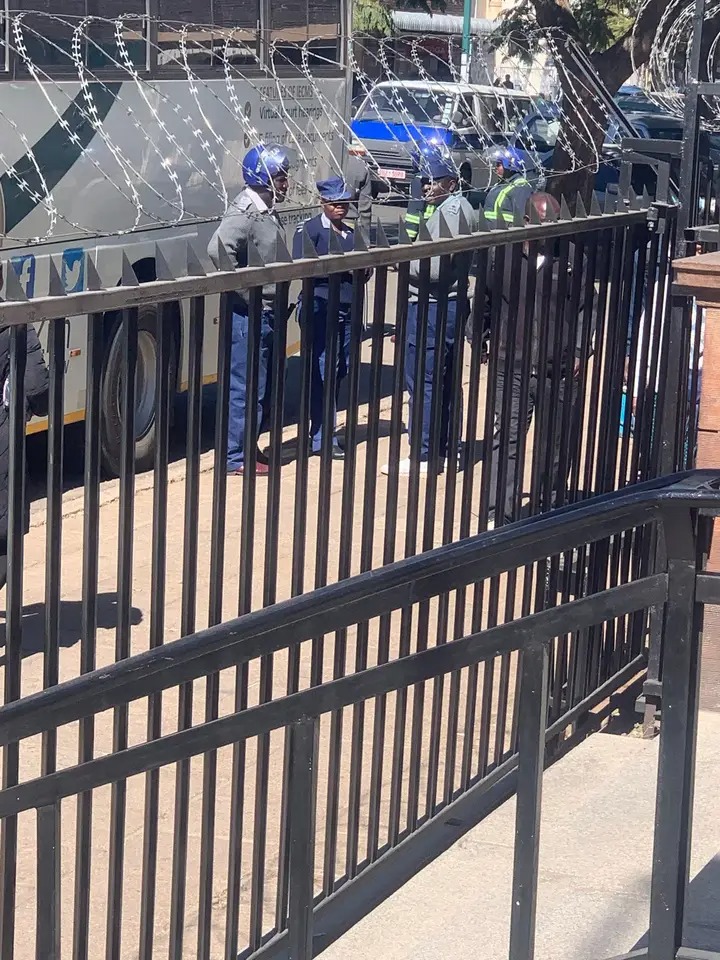
Zimbabwe’s response and efforts to deal with the crime is in fact to destroy evidence. It is complicit in through the National Peace and Reconciliation Commission (NPRC). The National Peace and Reconciliation Commission (NPRC) was constituted in accordance with the Constitution of Zimbabwe Amendment (No.20) Act 2013 and the National Peace and Reconciliation Act Chapter 10:32 of 2018. Through the NPRC the Zimbabwean government is attempting to conduct self directed hearings in the crime the government committed. Making the perpetrator serve as mediator and the jury in a crime they are highly complicit in and they engineered.
The Responsibility of Zimbabwe under the United Nations Genocide Convention.
Under the Genocide Convention, each individual State bears the responsibility to protect its populations from genocide, war crimes, ethnic cleansing, and crimes against humanity. This responsibility encompasses preventing such crimes, including their incitement, through appropriate and necessary means. Importantly, the Convention places an obligation on State Parties to take measures for both preventing and punishing the crime of genocide. This includes enacting relevant legislation and holding perpetrators accountable, regardless of whether they are constitutionally responsible rulers, public officials, or private individuals.
Under the Zimbabwean Constitution, the Declaration of Rights enshrines the right to life.
Right to Life: Every person has the inherent right to life. This means that the State and all individuals, institutions, and government agencies must respect, protect, promote, and fulfill this right for all Zimbabweans. The right to life is a foundational principle that ensures the preservation of human existence and dignity.
Zimbabwe has already failed on its primary responsibility to protect the Matabeleland population. The least it can do now is to protect the memory of the life of those lost and engage in a process that is genuine just to the victims.
STOP RIGHT THERE!
Life is sacred, life is precious and life belongs to God. It can never be taken lightly, eliminated abruptly and destroyed in any shape, form or way. Unless steps are taken in a way that resolves the matter with a level of seriousness it deserves any attempt is but a futile exercise to conceal the crime in its roots of perpetration.
Lets account for the lost, damaged properties and destroyed lives first before anything.
As Save Matabeleland Coalition we believe the only important way we can start the redress of the Genocide is by accounting for every life lost, every property damaged every family destroyed and every future robbed. Only when this first step is done then other processes can then follow. We will then need to know who committed these crimes, where they were committed, who are all the players involved big and small and what is still ongoing in relation to the committed crimes.
Statement Issued by the Save Matabeleland Coalition.
ABOUT SAVE MATABELELAND COALITION
SAMACO is a coalition of organizations dedicated to promoting, protecting, restoring and preserving the rights of the people of Matabeleland for full and equal access to justice, enjoyment of fundamental human rights as well as participation in the civic, cultural, social, and economic life of its diverse society. THE NETWORK—Made up of different organizations from different sects of the society the coalition brings together organizations from all corners of the nation and the international community concerned with the development and welfare of Matabeleland. It is a cut across representative organ of all sectors of the community.
LEARN MORE Save Matabeleland Join Save Matabeleland Coalition –
Follow us ebulenjini Save Matabeleland Coalition (ebulenjini.com)
Twitter Save Matabeleland (@SavMatabeleland) / X (twitter.com)
Facebook https://www.facebook.com/savematabelelandcoalition